
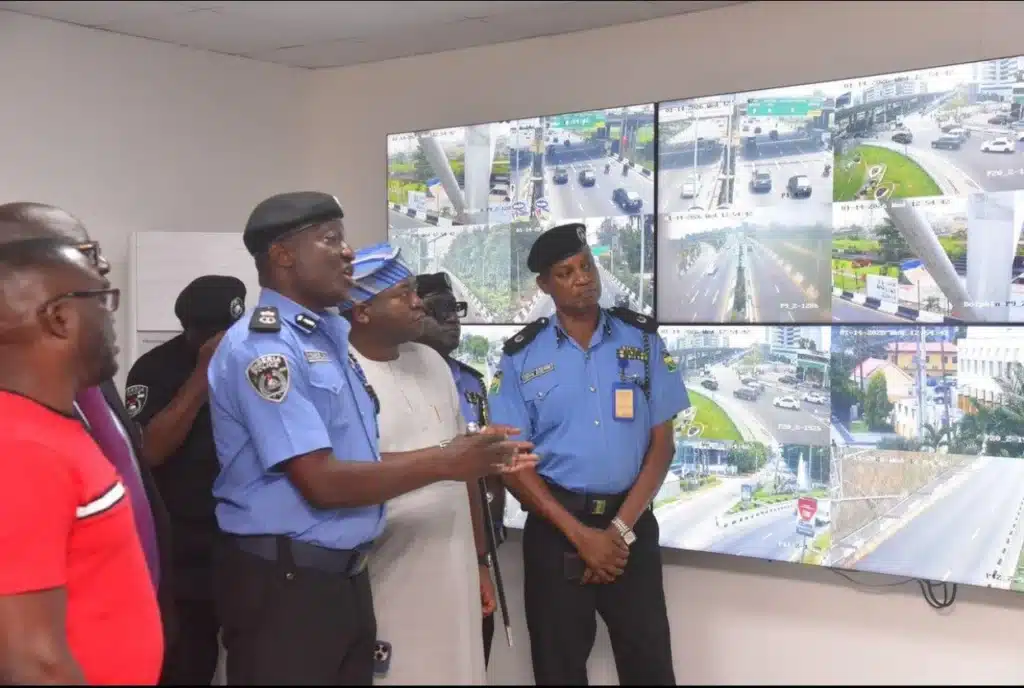
Nigeria’s $470 Million Surveillance Project is facing renewed scrutiny after an investigation revealed that several surveillance installations across the country have been abandoned, damaged or left without proper maintenance despite significant government spending on security technology.
Nigeria’s $470 Million Surveillance Project was introduced in 2010 to strengthen national security through modern communication systems, surveillance cameras and emergency response infrastructure. The Federal Government awarded the contract to Chinese technology company ZTE Corporation as part of efforts to improve crime detection and help security agencies monitor public spaces.
Nigeria’s $470 Million Surveillance Project was valued at $470 million, with approximately $399.5 million financed through a loan from China’s Export-Import Bank. The Nigerian government was expected to provide the remaining $70.5 million as counterpart funding. The project was designed to establish a nationwide security communication network, including approximately 2,000 surveillance cameras across Lagos and Abuja.
Nigeria’s $470 Million Surveillance Project was also expected to provide hundreds of base stations, emergency communication facilities, e-policing infrastructure and command-and-control capabilities. These systems were intended to help security agencies monitor criminal activities, respond to emergencies and gather evidence that could support investigations.
The condition of the infrastructure has raised concerns about whether the investment delivered the security improvements Nigerians were promised. According to an investigation by BusinessDay, several installations visited in Lagos showed visible signs of deterioration, with damaged equipment cabinets, exposed cables and surveillance infrastructure that appeared to have been neglected for years.
At Johnson Jakande Tinubu Park in Alausa, a security guard reportedly told investigators that maintenance workers who previously visited the camera installations had stopped coming approximately five years ago. At the Lagos State Ministry of Innovation, Science and Technology, investigators also observed discarded cables and equipment cabinets exposed to weather conditions.
The investigation further found that some surveillance cameras and solar panels remained mounted above roads, while the supporting equipment had deteriorated. In some locations, cables had been removed, cut or left hanging, raising questions about the operational condition of the installations.
Beyond Nigeria’s $470 Million Surveillance Project, government spending on technology-driven policing has continued through additional projects, including Smart E-Policing Infrastructure and the Nigeria Police Command and Control Centre.
Budget records examined by BusinessDay showed that approximately ₦2.89 billion was allocated to Smart E-Policing Infrastructure between 2019 and 2024. However, publicly available records do not clearly establish whether the project was fully delivered or how much of the infrastructure is currently operational.
The Nigeria Police Command and Control Centre at Force Headquarters in Abuja was commissioned in 2019. Despite the commissioning, subsequent budget documents continued to make provisions for its establishment, maintenance and expansion.
The 2025 Executive Budget Proposal also earmarked approximately ₦4.37 billion for licensing, internet services, repairs and maintenance of police command and control centres. These allocations have raised further questions about how the government tracks completed projects and monitors the performance of existing security infrastructure.
The challenges surrounding Nigeria’s $470 Million Surveillance Project highlight a major problem with public technology investments: installing equipment does not guarantee that it will remain operational.
Surveillance systems require reliable electricity, internet connectivity, trained technical personnel and regular maintenance. Without these supporting services, cameras and communication infrastructure can become ineffective even when the original equipment remains physically installed.
Timothy Avele, an open-source intelligence and digital forensics consultant, told BusinessDay that maintenance should be included in the initial procurement process, with clear responsibilities assigned to contractors.
He also recommended independent technical audits and a central register showing the location, condition and maintenance history of security installations. Such records would help authorities identify equipment requiring repairs and distinguish between systems that need rehabilitation and those that require complete replacement.
When surveillance and communication systems become inactive, security agencies may lose access to important information that could help reconstruct criminal incidents and support investigations.
BusinessDay reported that it contacted police representatives and submitted a Freedom of Information request to the Nigeria Police Force and the Ministry of Police Affairs regarding the status of the projects. However, the newspaper said it had not received responses as of the time of publication.
The developments surrounding Nigeria’s $470 Million Surveillance Project raise broader concerns about accountability, public procurement and the management of government-funded technology infrastructure.
For Nigeria, where kidnapping, armed robbery and other security challenges remain major concerns, functional surveillance systems could provide valuable support for law enforcement. However, the effectiveness of these investments depends on proper implementation, transparent spending and long-term maintenance.
Ultimately, the condition of the surveillance infrastructure raises questions about whether Nigeria’s investment in security technology is delivering the results the country needs.