
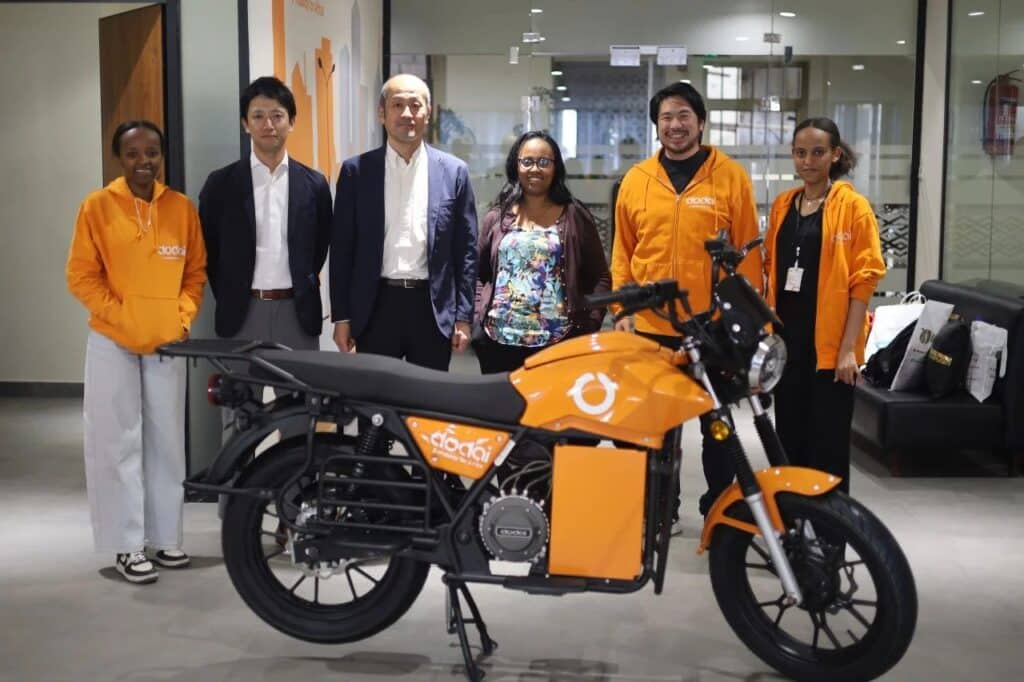
Dodai battery swapping is becoming an important part of Ethiopia’s electric transport transition as the startup expands its electric motorbike business and battery-swapping infrastructure. With demand growing for alternatives to fuel-powered transportation, the company is positioning itself to make electric motorcycles more accessible to commercial riders and businesses across the country.
The company recently secured an additional $3 million from Japanese energy company Tokyo Gas and Singapore-based Kaneto Capital Management. The investment brings its Series A funding to $16 million, following an earlier $13 million round completed in April 2026. The latest capital is expected to support the expansion of its battery-swapping network and increase the number of riders using its electric motorcycles.
Rather than concentrating only on selling electric vehicles, Dodai has built a business model that combines motorcycle assembly, distribution and battery infrastructure. This approach addresses one of the practical challenges facing electric mobility: keeping vehicles operational without requiring riders to wait for hours while their batteries recharge.
Through its battery-swapping service, riders can exchange depleted batteries for fully charged ones at designated stations. The process takes only a few minutes, allowing commercial motorcycle operators and delivery workers to return to their routes without spending significant time waiting for their vehicles to recharge.
For riders whose daily income depends on the number of deliveries they complete, reducing downtime can make a considerable difference. Dodai battery swapping provides an alternative to conventional charging by allowing riders to access charged batteries when they need them. This could make electric motorcycles more practical for people who depend on their vehicles for daily income.
The business is particularly relevant in Ethiopia, where government policies are encouraging a transition towards electric transportation. In January 2024, the country introduced restrictions on importing fuel-powered vehicles as part of efforts to reduce dependence on imported petroleum products and encourage the adoption of electric alternatives.
The policy shift has created room for companies developing electric mobility solutions, although the transition also comes with infrastructure challenges. Limited charging facilities, electricity supply concerns and the upfront cost of electric motorcycles remain important considerations for potential buyers.
Dodai is attempting to address some of these challenges by building its own network. According to Launch Base Africa’s report, the company has deployed more than 2,000 electric motorbikes and employs over 150 people, with most of its workforce made up of Ethiopian nationals.
Its battery swapping infrastructure is also central to its expansion plans. The company has outlined a target of reaching 3,000 battery-swapping users supported by 30 stations across Addis Ababa within 12 months. Over a longer period, it aims to serve 30,000 users through 1,000 stations in the Ethiopian capital.
These targets highlight the importance of infrastructure in determining whether electric motorcycles can become a practical option for everyday transportation. Selling more vehicles alone may not guarantee widespread adoption if riders cannot easily access charged batteries when needed. Dodai battery swapping is therefore not just a supporting service but a central part of the company’s growth strategy.
The latest investment also introduces a strategic relationship with Tokyo Gas, which brings experience in energy infrastructure and power management. Its participation could create opportunities for collaboration around battery technology and the management of electricity used to support the company’s growing network.
For Dodai, the challenge will be turning investor confidence into a reliable service that attracts more commercial riders. Expanding the number of stations will require careful planning, particularly in areas where electricity availability and operating costs could affect the consistency of battery supply.
The development of electric mobility businesses also raises broader questions about the sustainability of transportation startups across Africa. In Nigeria, for example, Moove’s exit from Nigeria raised questions about the future of ride-hailing and the challenges facing companies operating in the transportation sector.
Although Dodai operates a different business model, both developments highlight the importance of building transportation businesses that can manage operating costs while meeting the needs of riders.
The company is also looking beyond Ethiopia in the longer term. Its expansion ambitions include other African cities such as Accra, Abidjan, Kinshasa and Dar es Salaam. However, entering these markets would require adapting its operations to different regulatory environments, transport patterns and electricity infrastructure.
The broader opportunity for Dodai battery swapping lies in making electric transportation convenient enough for businesses and individuals to consider it a realistic alternative to conventional motorcycles. Commercial riders, delivery companies and logistics operators could become important customers as the market develops.
As Ethiopia continues its shift towards electric mobility, Dodai battery swapping could give the startup an advantage by connecting vehicle ownership with the infrastructure needed to keep those vehicles running. Whether the company can achieve its expansion targets will depend on how quickly it can build a dependable network and attract a larger base of active riders.
The latest funding provides additional capital for that ambition, but the long-term test will be whether its model can operate efficiently at scale and make electric transportation more accessible across African cities.