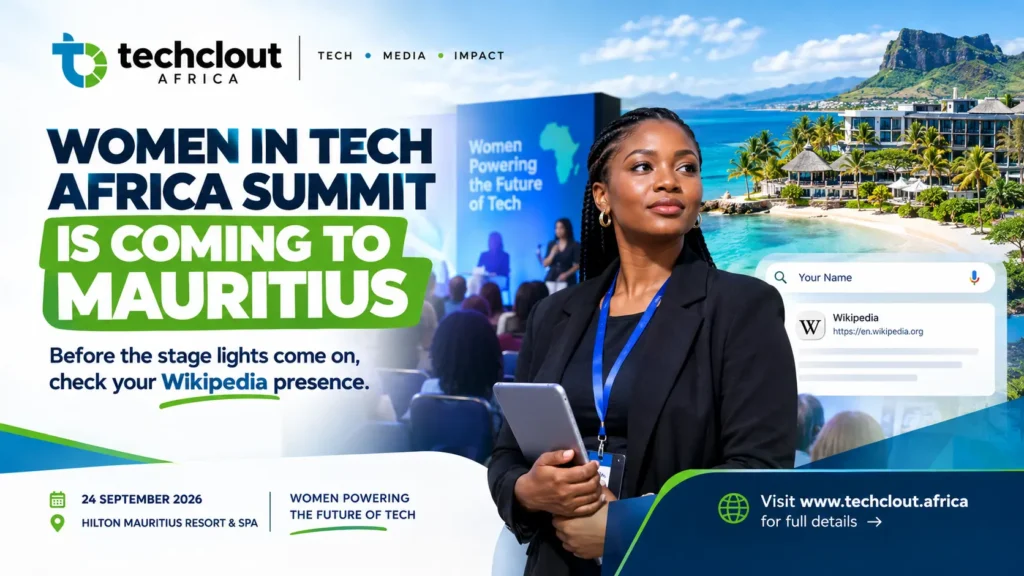
If you’re speaking, being honored, or just attending the Women in Tech Africa Summit, there’s the Wikipedia checklist to run before you ever step on that Mauritius stage.
On September 24, some of the sharpest women in African tech are heading to the Hilton Mauritius Resort & Spa for the Women in Tech Africa Summit, under the theme “Women Powering the Future of Tech.” The speaker lineup already includes names like Tiara Pathon (AI Skills Director for Microsoft Elevate), Shalini Jugessur (Managing Director, Accenture Mauritius), Sandeep Mohapatra (Head of Digital Transformation at Absa Mauritius), and Marcelo Aleman (CEO of Emtel), alongside leaders from across the Women in Tech Global network.
This is exactly the kind of moment we love talking about, because it’s a room full of women who are already doing the work and getting recognized for it. But here’s a question worth asking before the summit even starts: if someone in that audience Googles a speaker’s name mid-session, what comes up?
For a surprising number of accomplished women in tech, the honest answer is “not much.” And that’s a gap worth closing before the stage lights come on, not after.
A summit like this one isn’t just a stage, it’s a credibility multiplier. Every speaker in that room is about to be introduced to investors, journalists, partners, and other leaders who’ve never heard their name before. The moment someone hears a compelling introduction, their instinct is to search for more. If the search results are thin, outdated, or nonexistent, the credibility built in that five minute talk doesn’t travel very far past the room.
A properly built Wikipedia profile does the opposite. It’s neutral, third party verified, and it becomes the reference point that journalists, event organizers, and future collaborators pull from long after the summit wraps.
The visibility checklist
If you’re speaking, being honored, or simply attending this summit and want to walk in with your online presence actually matching your achievements, here’s what to check:
1. Do you already have a Wikipedia profile? Search your own name in quotes. If nothing comes up, or what comes up is a LinkedIn snippet and nothing else, that’s your first flag.
2. Do you have enough independent media coverage to meet notability requirements? Wikipedia doesn’t accept self written bios or company press releases as sourcing. You need genuine, independent coverage, interviews, features, award recognitions, conference speaker profiles, that a third party wrote about you, not that you wrote about yourself.
3. Is your existing online bio consistent across platforms? Your LinkedIn, your company bio, any past press mentions, they should tell the same story with the same facts. Inconsistencies (different job titles, different founding dates, different achievements) make it harder to build a credible, sourced profile and can raise red flags during the Wikipedia review process.
4. Do you have a recent, professional photo available with usage rights? Wikipedia requires images to be properly licensed, so a random photo pulled from Instagram usually won’t work. A recent headshot with clear usage permission makes this part much smoother.
5. Is your Google Knowledge Panel set up, or does one need to be built? This is the box that appears on the right side of a Google search with your photo, title, and quick facts. It often draws directly from a properly sourced Wikipedia page, so the two tend to go hand in hand.
6. Has your speaking engagement, award, or leadership role been documented anywhere independent? If this summit appearance is genuinely new territory for your public profile, start keeping a record now, press mentions, official summit materials, photos, anything that becomes usable sourcing later.
If you’re checking these boxes and coming up short
This is precisely the kind of moment our Wikipedia Profile Creation service exists for. If you already have sufficient independent media coverage to meet Wikipedia’s notability bar, we handle the research, the sourcing, the writing, and the submission process, so speakers, founders, and executives don’t have to figure out Wikipedia’s editorial standards on their own.
One more thing worth saying
Representation moments like this summit matter because they put women in tech in front of audiences who might not have otherwise heard their names. But a single appearance, however well delivered, fades from memory faster than most people realize. A properly documented, sourced, and searchable online presence is what turns a great conference moment into a lasting professional asset.
If you’re heading to Mauritius this September, or know someone who is, this is worth sorting out before the flight, not after the applause.
Already checked the list and came up short? That’s exactly what our Wikipedia Profile Creation service is for. Reach out to Techclout Africa before the summit, Join our Community & inside you get free access to premium Udemy courses, live tech job updates, scholarship and fellowship opportunities, and a community of professionals actually moving forward in their careers.
No fees. No paywalls. No gatekeeping.