
For ₦5,250, ordinary Nigerians can now own shares in Africa’s largest industrial asset, but the real question is whether it’s worth it
Something genuinely historic just happened in African finance. On September 15, Dangote Petroleum Refinery opened what’s being called the biggest public share offering in African history, and this time, it’s not just for the big institutional players. Everyday people across Nigeria, and eligible investors across Africa, can actually buy in.
Here’s what’s going on, and how to think about it if you’re considering putting money into it.
What’s actually being offered
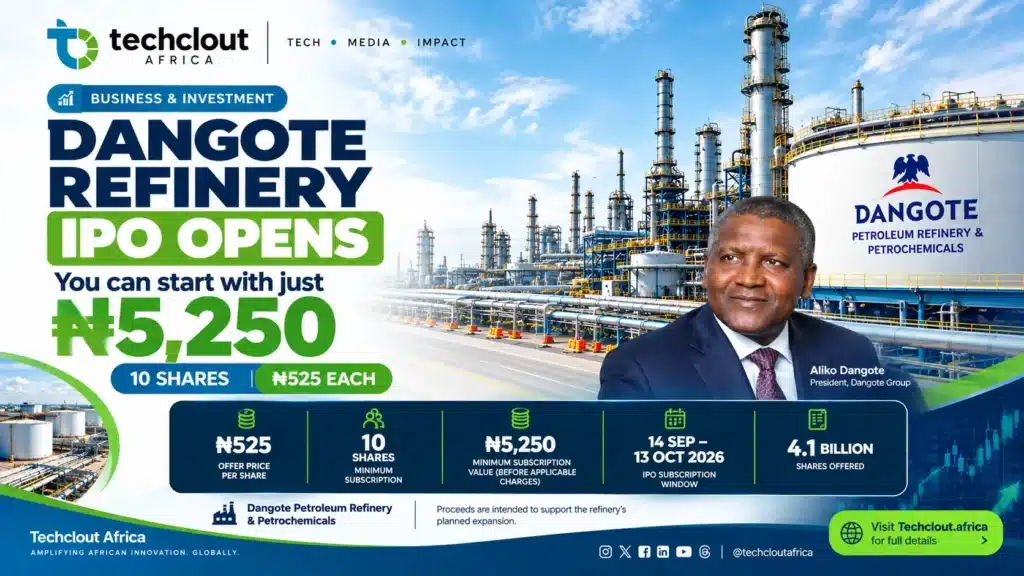
The refinery is selling 4.1 billion ordinary shares at ₦525 each, which works out to roughly 40 US cents a share. The minimum you can buy is 10 shares, so you can technically get in for about ₦5,250, that’s roughly $4. If the offer gets fully subscribed, Dangote is looking to raise around ₦2.15 trillion, close to $1.6 billion.
The offer opened on September 15 and closes October 13, giving people about a month to decide and participate. Shares will list on the Nigerian Exchange, and the company has said a foreign listing isn’t happening for at least another three years, so the NGX is the access point for now, whether you’re in Lagos or anywhere else on the continent.
Aliko Dangote has been very deliberate about how he’s framed this. He’s called it “the IPO for the people,” and the numbers back that framing up somewhat, the entry price is genuinely low enough that ordinary Nigerians, not just wealthy investors, can participate. Reports suggest the company is targeting close to 10 million retail investors, which would be an enormous number for any African stock offering.
Why this is a big deal beyond the numbers
For decades, Nigeria imported most of its refined fuel because its own state refineries barely functioned. Dangote’s refinery changed that story. It’s now producing about 700,000 barrels a day and has turned Nigeria into a net exporter of refined fuel, which is a genuinely significant shift for a country that spent years dependent on fuel imports. There’s also an expansion plan on the table to eventually push capacity to 1.4 million barrels a day.
Financially, the refinery has had a real turnaround. It reportedly moved from a $476 million loss in 2025 to $1.82 billion in net income in the first half of 2026 alone. That swing is part of what’s fueling investor excitement heading into the offer.
This is also happening at a moment when global oil prices have been climbing, which adds to the appeal for people watching the refining business specifically.
The part that deserves honest attention: valuation and risk
This is where it gets more complicated, and it’s worth being straight about it rather than just repeating the excitement.
The refinery reportedly cost around $19 to $20 billion to build. The IPO is pricing it at somewhere between $40 and $49 billion, more than double what it cost to construct. Analysts are genuinely split on whether that’s justified. Some research firms have actually valued the company even higher, suggesting it could be worth significantly more based on future earnings potential. Others are cautioning that the offer price isn’t a guaranteed floor, and that once trading starts, the market will decide the real value based on actual performance, not the story around it.
There are a few specific risks worth knowing about if you’re weighing this:
Debt and financing: A refinery this size wasn’t built purely on equity. Dangote Industries had its credit rating downgraded by Fitch back in 2024, which is a signal that leverage and financing costs are worth paying attention to, even if they don’t show up clearly in the retail marketing.
Feedstock supply: The refinery still depends significantly on crude oil supply, and there have been ongoing tensions around securing enough domestic Nigerian crude. Analysts have flagged this as a real risk, since supply problems directly affect margins and how much of its capacity the refinery can actually run at.
Ownership concentration: Even after the IPO, Dangote is expected to retain around 87 percent ownership. Some commentators have pointed out that a truly “people-driven” offering would come with a bigger public float, so it’s fair to keep that in mind rather than assume this makes it a fully public company in the way some other IPOs are.
Post-listing volatility: A few analysts have flagged the possibility of a price dip right after listing, if a large number of retail investors decide to sell quickly once shares start trading. That’s a common pattern with large, heavily marketed IPOs, not unique to this one, but worth knowing about if you’re buying with short-term expectations.
The dollar dividend isn’t locked in yet: Part of the appeal being marketed is the idea of dividends paid in US dollars, which would be attractive given naira volatility. But that arrangement still needs regulatory sign-off and isn’t fully confirmed as of the offer opening.
How to actually think about this if you’re considering it
None of this means the IPO is a bad idea, plenty of serious analysts see real long-term upside if the refinery executes on its expansion plans and keeps its supply chain steady. But it also isn’t a guaranteed win just because of who’s behind it or how big the headlines are.
If you’re thinking about participating, it’s worth reading the actual prospectus once it’s fully published rather than relying only on the marketing language, understanding that ₦525 isn’t a promised floor price, and being honest with yourself about your own timeline. Are you buying because you believe in the refinery’s long-term earnings power, or because everyone around you is talking about it? Those are two very different reasons to invest, and they should lead to different decisions about how much you put in and how long you plan to hold it.
We’re not financial advisors, and this isn’t investment advice, just a breakdown of what’s actually on the table so you can make your own informed call. If you do decide to participate, going through a licensed stockbroker with a proper CSCS account is the standard route, and if you’re outside Nigeria, you’ll need a bit more setup time to get the right accounts in place before the window closes.
Whatever you decide, this moment says something bigger about where African capital markets are heading. Ten million people potentially owning a piece of the continent’s largest industrial asset isn’t a small story. It’s a shift in who gets to participate in African wealth creation, and that part is worth paying attention to regardless of whether you personally buy in.
Join our Community & inside you get free access to premium Udemy courses, live tech job updates, scholarship and fellowship opportunities, and a community of professionals actually moving forward in their careers.
No fees. No paywalls. No gatekeeping.